
Christian Tybring-Gjedde & Jan-Aage Torp in Dagen: «Boycott does not bring Peace closer»
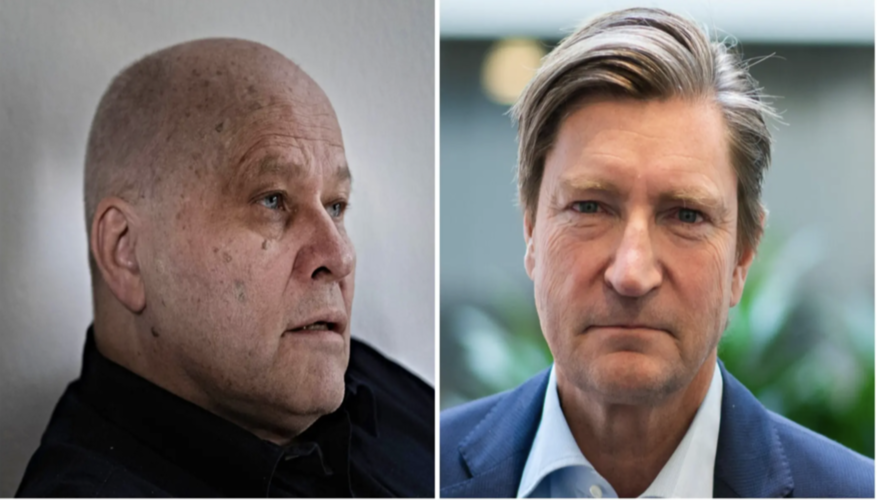 ISOLATION: Only Israel is constantly faced with demands for total economic and cultural isolation, write the authors. Photo: Dagen Archives
Some have called for expanding a boycott from Israeli settlements to cover all of Israel. This applies particularly to the political left. If that happens, it would constitute collective punishment, harm Palestinian workers, and render Norway irrelevant as a peace actor. At the same time, it would damage Norwegian imports and exports of advanced technology.
The argument put forward is that Norway should first ban trade with Israeli settlements, and then boycott all of Israel if the country’s government does not change course. We share the despair over civilian suffering. But the means being proposed is both poorly justified and likely to harm those it claims to help.
To legitimize its dramatic move, the ICJ’s advisory opinion from 2024 is presented as decisive for all political and legal questions. The opinion targets Israel’s policies and presence in the occupied Palestinian territories. It does not, however, make Israel an illegal state. The genocide case brought by South Africa has also not been finally decided. Serious accusations must be taken seriously, but they should not be presented as legally binding conclusions before the court has actually ruled.
The decisive question is also what a boycott would do in practice. Before October 7, a large number of Palestinians from the West Bank worked in Israel. In industrial zones and Israeli companies in the area, tens of thousands of Palestinians had jobs at wages that are often significantly above the level in areas governed by the Palestinian Authority. When such businesses are hit, it is not government members in Jerusalem who lose income first. It is Palestinian families.
Activists choose to overlook this and present it as if the rest of the Israeli economy can still function. That misses the objection. A policy does not become more morally correct because the harm it inflicts on Palestinian workers is limited. If Israel responds with countermeasures, the vulnerability becomes even greater. Most Palestinian exports go to the Israeli market. A trade war could therefore have far more serious consequences for the Palestinian economy than for the Israeli economy.
The boycott proposal is also selective. Norway has chosen targeted sanctions against Russia, not a complete blockade of all Russians. Furthermore, we maintain trade with a number of countries accused of gross human rights violations. Yet it is only Israel that is repeatedly met with demands for total economic and cultural isolation. Principles must apply equally. Otherwise, they appear as political selection, not consistent human rights policy.
It is also worth remembering that Norway itself is closely tied to Israeli technology and expertise through international value chains, including in the defense, sensor, security, and high-tech sectors. A broad boycott would therefore not only be a foreign policy instrument, but could also have consequences for Norwegian businesses and technology environments. Norway should be cautious about tearing down technological and industrial cooperation that may also matter for our own security and competitiveness.
In their eagerness for a boycott, many activists overlook the triggering cause of the ongoing war. On October 7, 2023, Hamas killed around 1,200 people and took more than 250 hostages. The attack was not a footnote, but a targeted terrorist attack and a dramatic break with a development in which several Arab countries were seeking normalization with Israel. It is also worth noting that the war being waged is not directed at Palestinians, but at the terrorist group Hamas, which has infiltrated large parts of Palestinian society. No responsible Israeli government can accept that an armed organization that explicitly wants to wipe out the country retains the ability to repeat the attack.
That does not exempt Israel from its duty to comply with the laws of war or to protect civilians. Nor does it make every Israeli decision wise or defensible. But a discussion about peace that ignores Hamas, the hostages, the rocket attacks, and Israel’s security needs is not balanced. It is detached from reality.
The same applies to the debate about UNRWA. Palestinian civilians must receive food, medicine, schooling, and protection. At the same time, Norway must be able to demand full transparency regarding serious accusations against staff, teaching materials, and possible cooperation with Hamas. Increasing support without clear demands for control and reform is not solidarity; it is closing one’s eyes to therisk that a humanitarian organization can also be exploited by armed actors. Aid should be channeled so that it reaches civilians and does not strengthen extremists.
A historical dimension often missing from this debate is that the refugee tragedy of 1948 did not affect only the Palestinians. At the same time as hundreds of thousands of Palestinians were driven into flight or left their homes during the war, Jewish communities in several Arab countries experienced growing persecution, discrimination, violence, confiscation, and in some cases expulsion. In the decades that followed, several hundred thousand Jews left Arab countries, many under strong pressure. This was a parallel refugee history that must also be part of the historical understanding if the goal is reconciliation rather than one-sided blame.
That does not mean the Palestinian Nakba should be explained away or trivialized. The UN estimates that more than 750,000 Palestinians were driven into flight in 1948. But a serious historical account must be able to accommodate both peoples’ experiences — including the Jewish mass flight from Arab countries. That number is even higher. That today it is estimated that only around 12,000 Jews remain in Arab countries is not a coincidence, but documentation of a lack of willingness to accept religious pluralism.
Norway has weakened its own ability to contribute in just a few years. The government has adopted a line that is perceived in Israel as one-sided, while Norwegian politicians claim that Norway should play a role in the region. The result is that contact and trust have been reduced. One does not become a relevant peace actor by talking mostly with one side and moralizing at the other. Diplomacy requires that both parties believe it is worth taking the call.
The Oslo process gave Norway a special position because the country could speak with adversaries and facilitate practical compromises. Three decades later, we can conclude that solemn declarations have not created peace. Lasting reconciliation must be built on security, responsible leadership, economic development, and a gradual change in attitudes. It also requires that Palestinian authorities stop glorifying and financially rewarding terror, and that Israel make real political choices that open the way for Palestinian self-determination.
A full boycott will not weaken Hamas or create a more responsible Palestinian leadership. It could harm civilians, jobs, and the arenas of cooperation that can actually build trust. If Norway is to have the opportunity again to play a relevant role in the region, increased trade must be a central part. Furthermore, demands must be made of both parties, Palestinian civilians must be supported through controllable channels, and Arab-Israeli cooperation that provides jobs and mutual dependence must be strengthened.
Peace is not created by making two peoples poorer and more isolated. It is created when extremists lose influence, civilians get a future worth defending, and leaders on both sides are forced back to the negotiating table. Moral posturing makes things worse.
